
Chipped a Front Tooth? It Might Be a Warning, Not an Accident.
Most patients think a chipped front tooth means they bit down on something wrong. Sometimes that's true. More often, the chip is a symptom of a bite problem the patient didn't know they had.

Dr. John M. Peterson, DDS
Dentist · River Crossing Family Dental
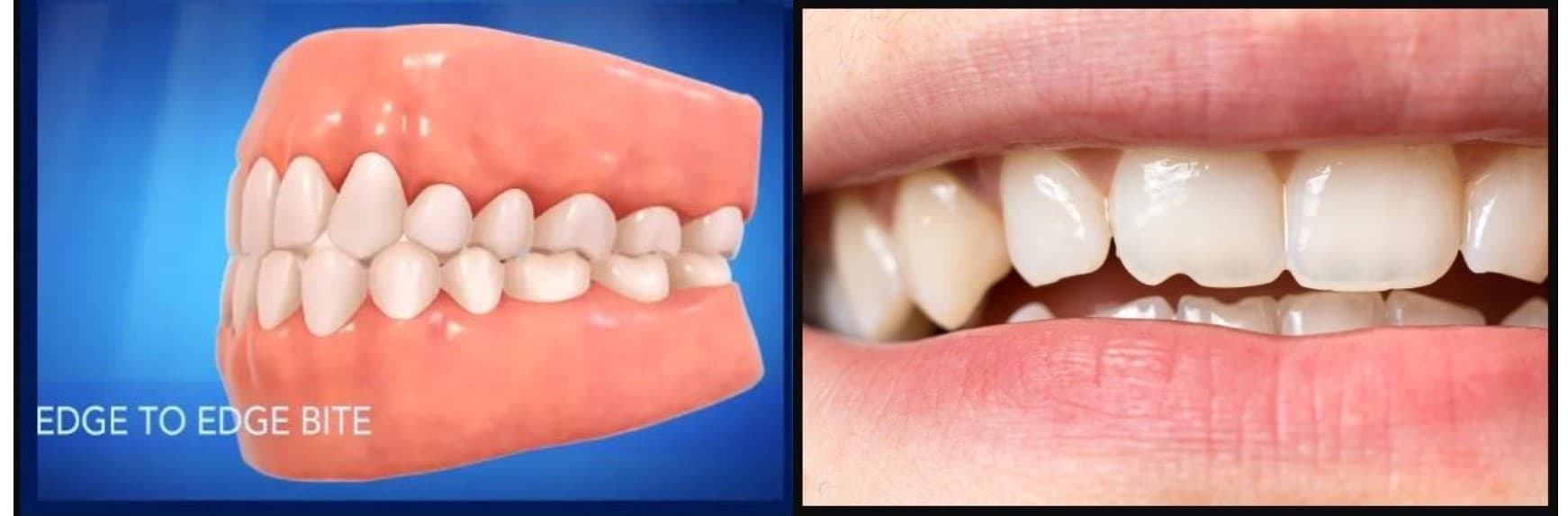
Patients walk into the office with a chipped front tooth all the time. Most of them have a story for it — biting into ice, an ill-timed fork hitting the tooth, a slip on the hiking trail. Sometimes that's exactly what happened. But often, when I take a closer look at how the teeth come together, I find a different culprit hiding in plain sight: the bite.
What an edge-to-edge bite looks like.
In a healthy bite, the upper front teeth overlap the lower front teeth slightly when you close your mouth — about 1–2 millimeters. That overlap protects the edges of both rows from grinding into each other.
In an edge-to-edge bite, the front teeth meet straight on, edge against edge, with no overlap. Every time you chew, the front teeth take the force that the back teeth are supposed to absorb. Over months and years, the enamel on those front edges wears down — and eventually, a piece chips off.
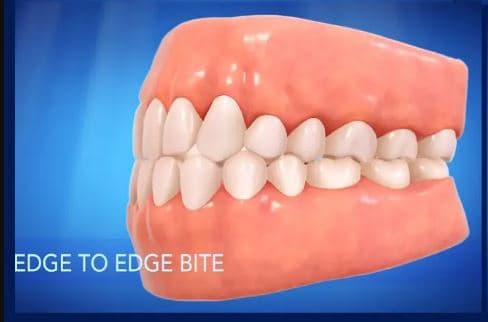
Why bonding alone isn't the answer.
If you chip a front tooth and we just bond it back together — repair the visible damage and send you home — we haven't actually fixed anything. The bite that caused the chip is still there. The bonding material is softer than enamel, which means it'll chip too. Usually faster than the original tooth did.
A patient who comes in every couple of years to re-bond the same front tooth is a patient with a bite problem. The bonding is treating the symptom, not the disease.
How we fix it.
Most edge-to-edge bites can be corrected with Invisalign. The aligners gradually shift the teeth so the upper row overlaps the lower row the way it's supposed to — which moves the chewing force off the front teeth and onto the molars, where it belongs.
Once the bite is corrected, we can restore any chipped or worn edges with cosmetic bonding or veneers. But this time, the restoration lasts — because we removed the force that was breaking the teeth in the first place.
What to do if you've chipped a front tooth.
- Save the piece if you can — sometimes we can bond it back. Put it in milk or saline if it's a clean break.
- Cover any sharp edges with dental wax (most pharmacies sell it) so you don't cut your lip or tongue.
- Call us. We keep room in the schedule for emergency visits.
- When you come in, ask us to evaluate your bite — not just the chipped tooth.
Repeated chipping is your mouth telling you something needs to change. We'd much rather correct the underlying bite once than re-bond the same tooth every two years for the next decade. If you've chipped a front tooth recently, schedule a free orthodontic consultation and let's look at the whole picture together.